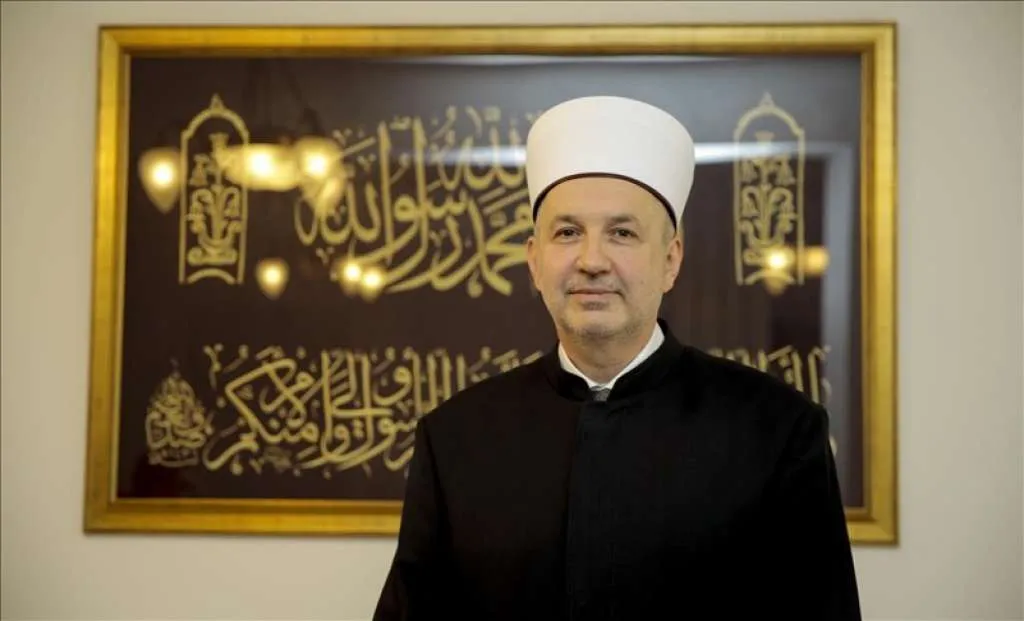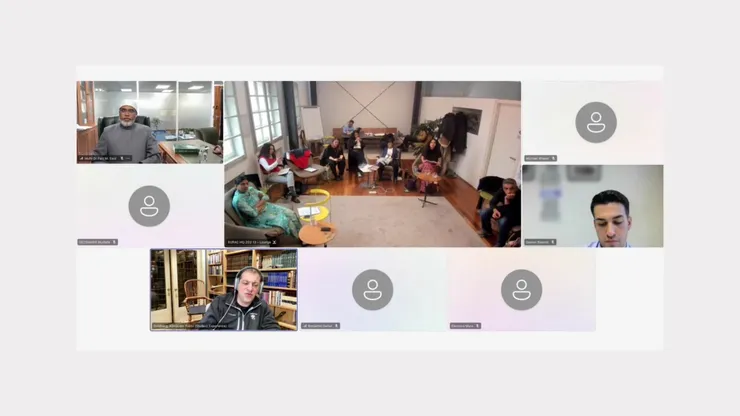
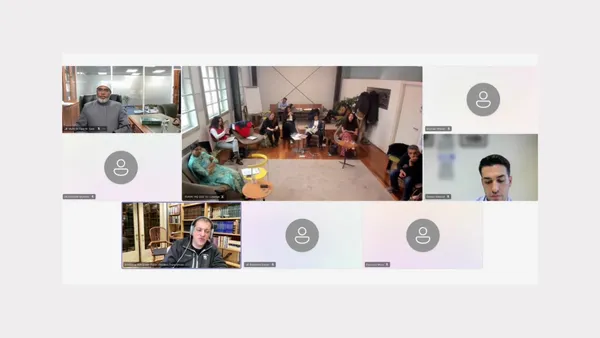
On 4 November 2026, Mufti Prof. Dr Faid Mohammed Said, MJLC Board Member, participated in the annual meeting of Faith for Rights, an initiative of the United Nations Office of the High Commissioner for Human Rights (OHCHR), held from 3 to 5 November in Bolzano, Italy, with online participation. The meeting brought together representatives of different religious and belief traditions to explore the connections between faith, human rights and the advancement of peaceful and inclusive societies.
Speaking about the experience of the MJLC, Mufti Said reflected on the importance of sustained Muslim-Jewish cooperation and its contribution to fostering mutual understanding and peaceful coexistence in Europe. His contribution highlighted the role of religious leadership in translating shared ethical principles into meaningful engagement, while affirming the dignity and rights of every human being.
Human dignity as common ground
At the heart of Mufti Said’s remarks was the Qur’anic understanding of human dignity and the value of human diversity. He recalled: “We have indeed honoured the children of Adam”, emphasising the inherent worth of every human being. He further reflected on the teaching that humanity was created as peoples and communities “so that we may come to know one another”.
The principles invoked in Mufti Said’s remarks speak to a broader ethical vision in which human dignity, mutual recognition and respect for diversity are essential to the pursuit of peaceful coexistence. Within this vision, religious difference is not a barrier to understanding, but an invitation to encounter one another with openness and respect. It is this recognition of our shared humanity, alongside an appreciation of our distinct traditions, that provides fertile ground for meaningful Muslim-Jewish cooperation and a common commitment to the dignity and rights of all.
From shared principles to meaningful cooperation
The Faith for Rights framework provides an important platform for connecting the ethical foundations of religious traditions with universal human rights. Its 18 Commitments call for the protection of minorities, freedom of religion or belief, equal participation in public life and the rejection of advocacy of religious hatred that incites discrimination, hostility or violence.
The MJLC’s work reflects these principles through sustained engagement between Muslim and Jewish religious leadership, fostering mutual understanding and cooperation while addressing antisemitism, anti-Muslim hatred and discrimination.
Mufti Said’s participation on 4 November reaffirmed a conviction at the heart of the MJLC’s mission: that recognising the dignity of every human being is not simply a shared principle, but the foundation upon which lasting relationships, mutual respect and meaningful cooperation can be built.