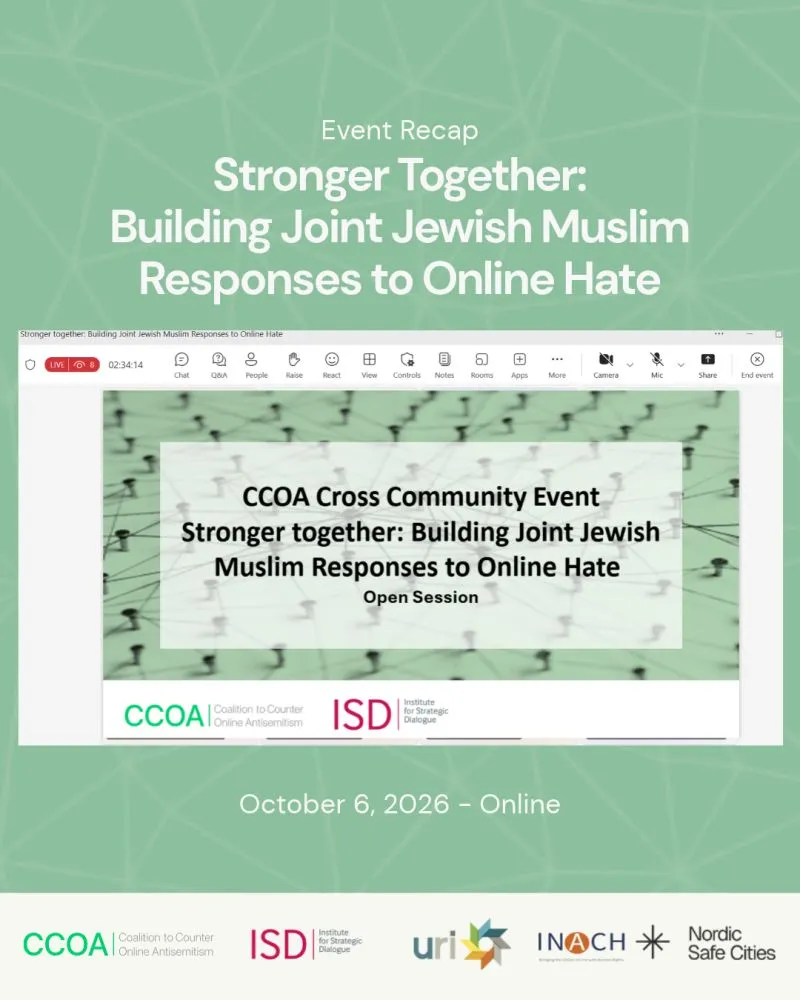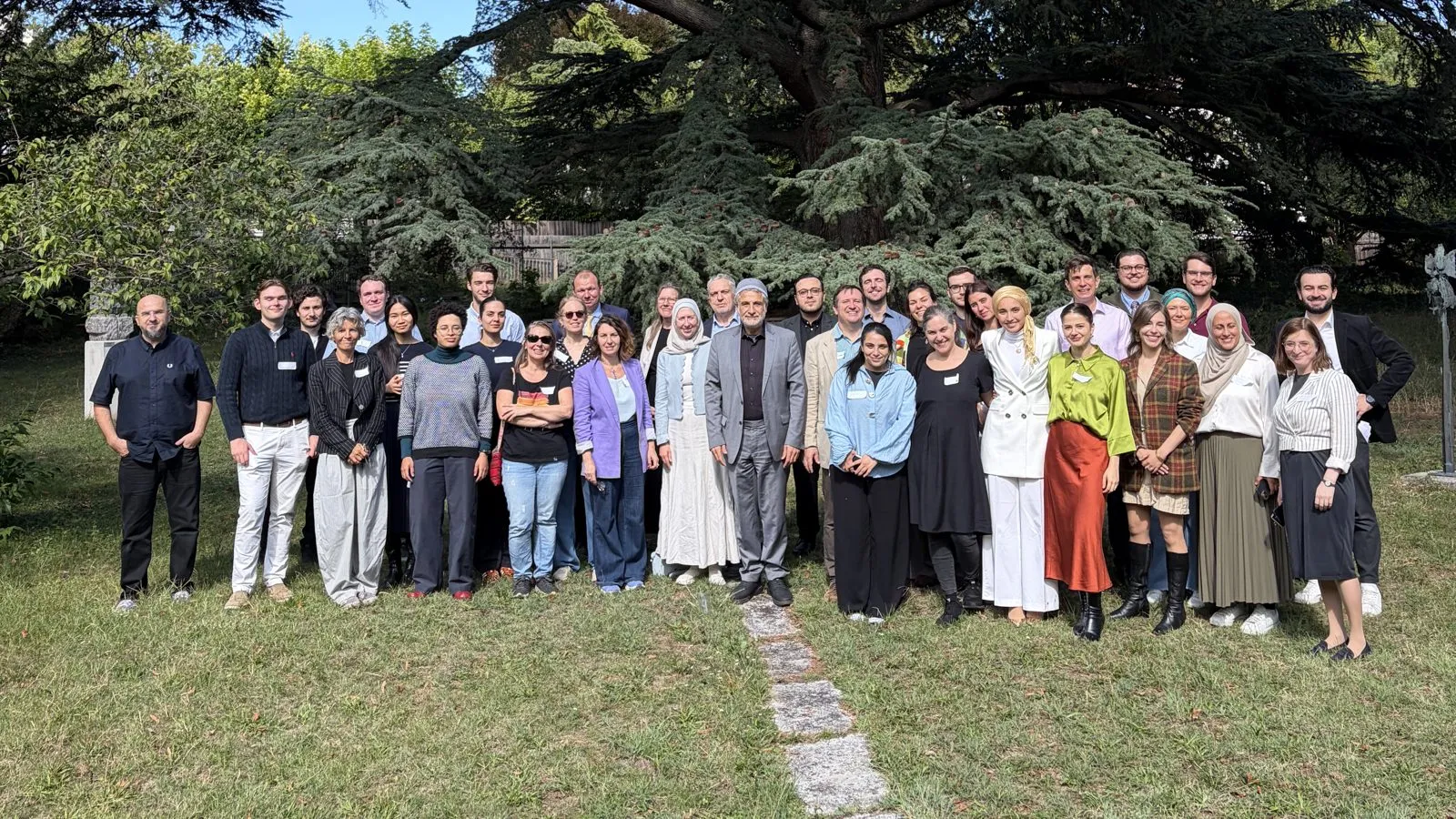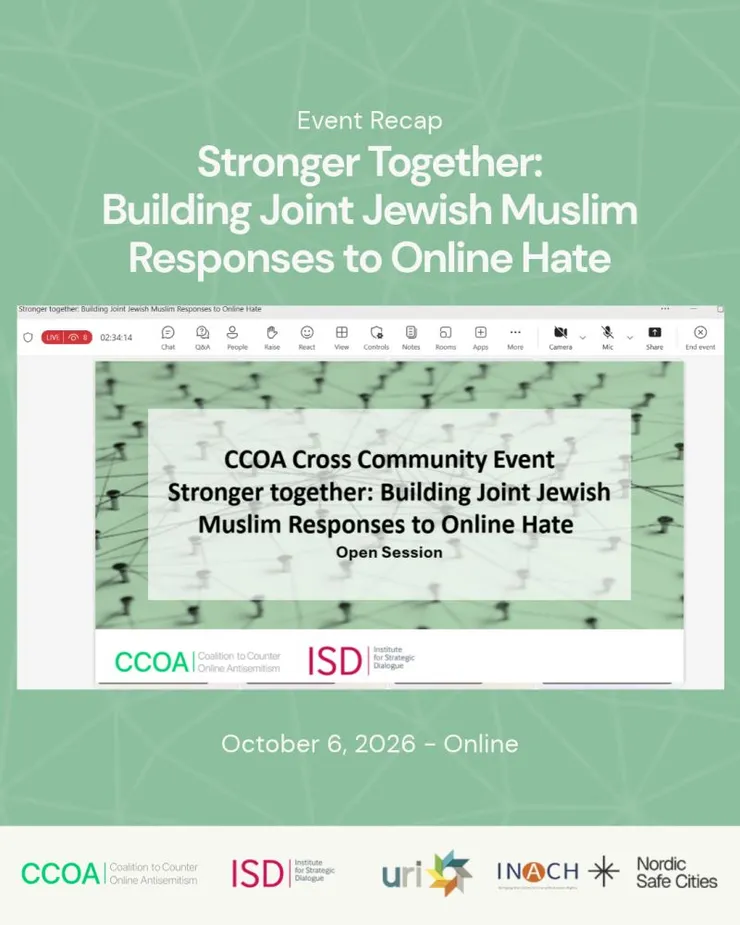
On 6 October 2026, the Coalition to Counter Online Antisemitism (CCOA) and the Institute for Strategic Dialogue (ISD), convened “Stronger Together: Building Joint Jewish-Muslim Responses to Online Hate”, an online event bringing together civil society, policy and community actors to consider how Jewish and Muslim communities can respond collectively to antisemitism, anti-Muslim hatred and the wider harms proliferating across digital spaces.
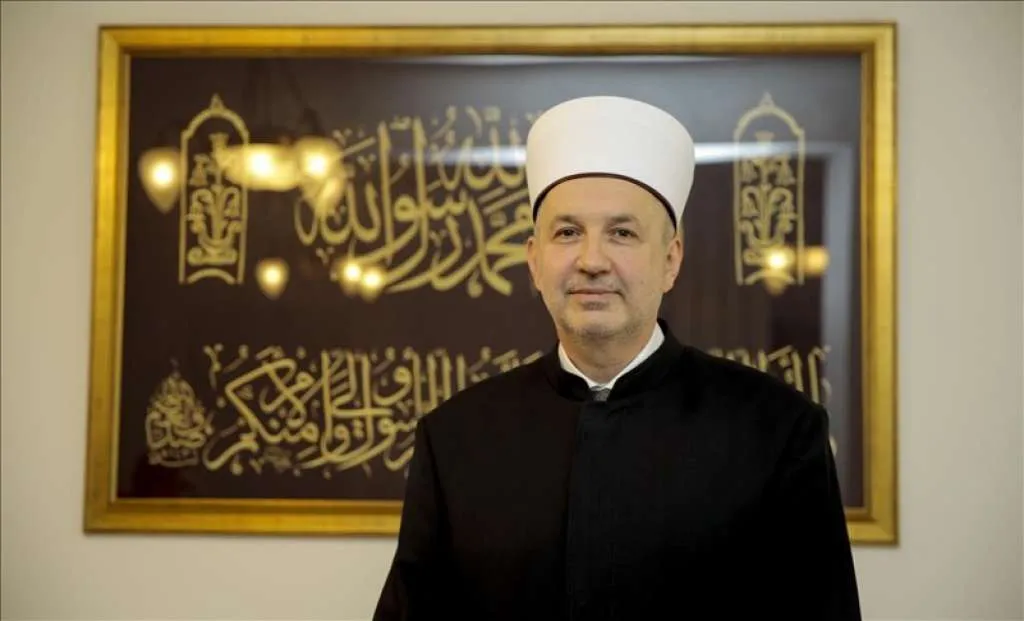
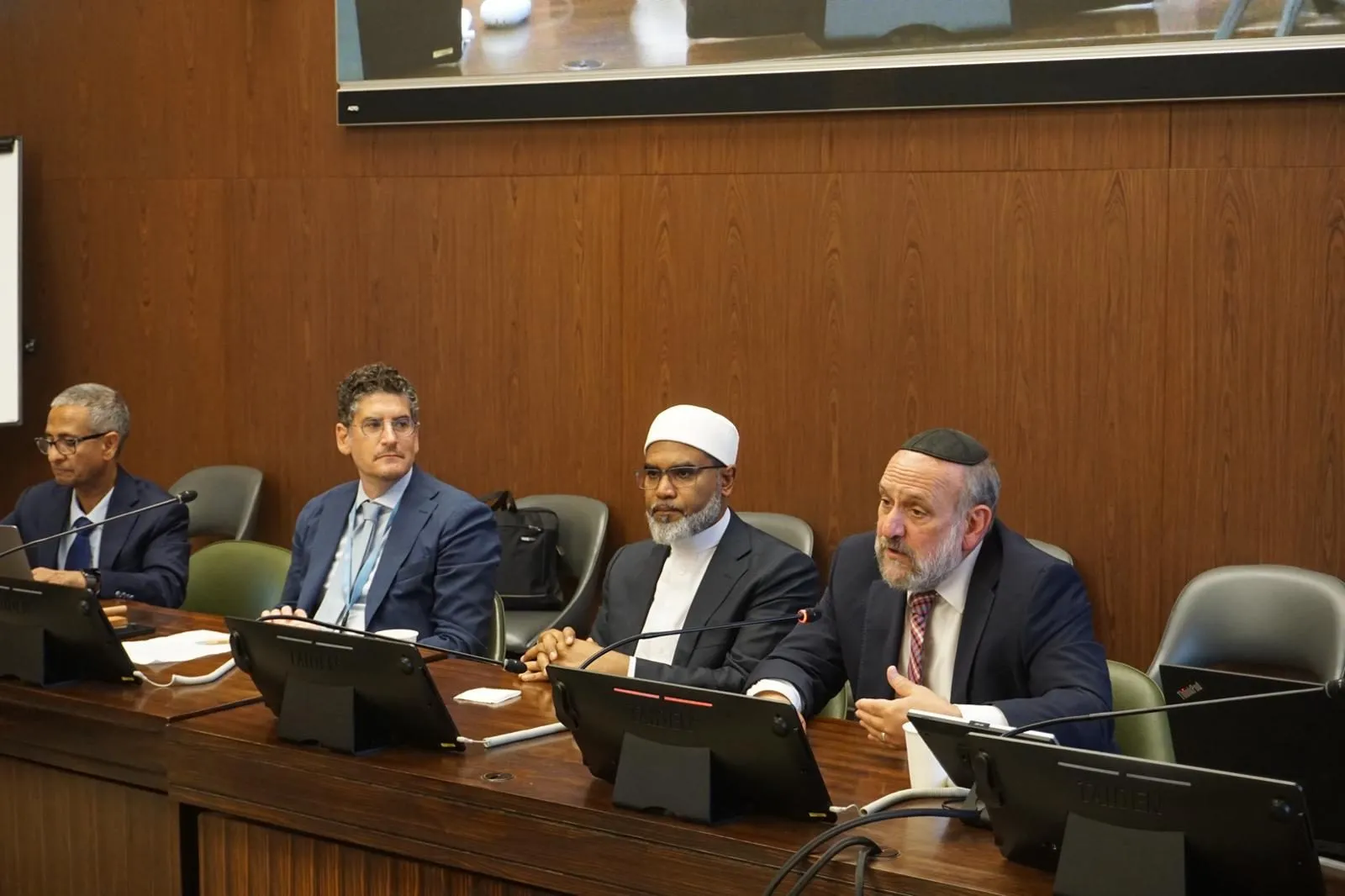
Organized in partnership with the International Network Against Cyber Hate (INACH), Nordic Safe Cities and the United Religions Initiative (URI), the event created space to exchange expertise, address common challenges and identify practical opportunities for cooperation. Among its contributors was Imam Yahya Sergio Yahe Pallavicini, MJLC Board Member and Vice President of COREIS, who led a dedicated deep-dive session on Muslim-Jewish cooperation, bringing the perspective of European Muslim religious leadership to a discussion of particular urgency for communities across Europe.
From polarization to cooperation
The online sphere is not detached from the societies in which it operates. Narratives of suspicion and exclusion, amplified through digital platforms, can deepen mistrust between communities, reinforce prejudice and give new visibility to forms of hatred that threaten both individual dignity and social cohesion. Their consequences do not remain on screens; they are felt in neighborhoods, institutions and the everyday lives of those who become their targets.
Against a backdrop of deepening polarization across Europe, Imam Pallavicini’s session examined the role of European Muslim religious leadership in articulating a principled counter-narrative to antisemitism and division, while highlighting the MJLC’s contribution to advancing Muslim-Jewish cooperation through engagement with European Union institutions and sustained efforts to foster mutual understanding and counter hatred and discrimination.
His contribution highlighted the importance of sustaining relationships between Muslim and Jewish communities, particularly when political tensions make cooperation more difficult. Such engagement does not erase the distinct histories and experiences of antisemitism and anti-Muslim hatred. Rather, it creates opportunities for mutual understanding, solidarity and more effective responses to discrimination.
For the MJLC, this commitment extends beyond dialogue alone. It means building trust, maintaining channels of communication and translating shared concerns into meaningful cooperation between religious leadership, civil society and European institutions.
From shared concerns to collective action
Imam Pallavicini’s contribution formed part of a wider programme featuring European Commission Coordinators Katharina von Schnurbein and Marion Lalisse, alongside experts working across policy, education, research and community engagement. Workshops and deep-dive sessions addressed online hate narratives, platform accountability, municipal cooperation and educational approaches to countering discrimination.
Together, these exchanges underscored the need to connect online harms with their consequences in everyday life and to strengthen cooperation between communities, civil society and public institutions. While antisemitism and anti-Muslim hatred must each be understood in their specific contexts, exchanging experiences can help build more informed and coordinated responses.
Countering hatred requires not only the determination to challenge it, but also the relationships and shared responsibility that make collective action possible.
A shared commitment, carried forward through sustained cooperation
For the MJLC, Imam Pallavicini’s participation reaffirmed the importance of Muslim-Jewish cooperation as a sustained commitment rather than a response confined to moments of heightened tension. It demonstrated the relevance of bringing religious leadership into wider European efforts to address hatred and discrimination, while ensuring that cooperation remains attentive to the distinct experiences of the communities it seeks to connect.
The challenge is not simply to oppose hatred wherever it appears, but to build relationships strong enough to withstand the divisions it seeks to deepen. That work begins with listening, acquires substance through cooperation and finds its purpose in the defense of dignity and the possibility of living together.
In a digital environment where hostility can travel faster than understanding, the task of building trust becomes all the more urgent. Imam Pallavicini’s contribution to “Stronger Together” placed Muslim-Jewish cooperation within that task: not as a denial of differences, but as a deliberate commitment to ensuring that differences do not become a justification for hatred and that the responsibility to confront discrimination becomes a shared one.
Photo: courtesy of the Coalition to Counter Online Antisemitism (CCOA).